宋 (Song) dynasty doesn't get enough promotion
Saturday, November 30th, 2024 11:35![[personal profile]](https://www.dreamwidth.org/img/silk/identity/user.png) cashew
cashewChinese period dramas are not nearly enamored enough with the 宋 (Song) dynasty. Most people are overly focused on it being the dynasty that the Mongols successfully invaded, so the narrative is always it was the dynasty that "ended" continuous Han rule (even though the "Han" majority has always been a huge mixture of immigrants since the existence of 汉 as a concept). But people never seem to remember that 宋 delivered so many cool things and is actually one of the most progressive dynasties, even probably more so than the often touted 唐 (Tang) dynasty. (Don't get me wrong, 唐 delivered some very major reform and policy changes, but for the most part it was still mostly in the experimental phase. 宋 refined everything from 唐 and really pushed through some hugely influential things.) So, here are some major contributions of 宋 dynasty:
Only dynasty in Chinese history where women were more valued culturally than men. Although patriarchy was still the governing norm, women across the board had much higher social status and gained privileges that were not available during other dynasties, including: earned higher average wages than men; could initiate divorce papers; had legal fiscal control of her dowry; held official positions in the government with corresponding pay; participated in the imperial exam; attended school with men; empresses took over decision making when the emperor was indisposed as a norm; etc.
The font 宋体 was developed and used as the default for printing to this day. It is also the default font for Chinese in digital format.
Printing press, gunpowder, naval compass were all invented during this dynasty.
Paper money invented and used regularly during this dynasty.
Balance of power between the Emperor and Prime Minister. The Prime Minister has the political power to veto the Emperor's decrees.
Successfully maintained three functioning branches of government that had oversight over each other. (唐 dynasty had it for a very short period before the central branch consolidated power and cannibalized the other two branches.)
Chairs.
Steeped tea instead of boiled tea.
Stir-fry. So much of "traditional" Chinese dishes came from this dynasty.
Black tea. Do you understand how coveted black tea is? England started wars (multiple) for access to this stuff.
Don't get me wrong, I'm very glad dynastic China is in the past, because that system is oppressive AF, even with the reforms. But 宋 dynasty doesn't get enough credit for being one of the more culturally progressive dynasties.
 |   |


no subject
Date: 2024-11-30 08:10 (UTC)Because if we're talking wuxia, Song dynasty is definitely not under-represented. From the ancient classics of 水浒传 & 包青天 (and derivatives) to more modern classics like 天龙八部,射雕英雄传,神雕侠侣,四大名捕,逆水寒... It's a great setting for wuxia stories.
If we're talking about palace/romance dramas, that's maybe to blame on the emperors. The Song emperors just didn't have a messy court life like Han and Tang did. Or have enough infamy/strong characterization to them like the Ming and Qing emperors did.
> Stir-fry. So much of "traditional" Chinese dishes came from this dynasty.
To add, if we're talking about gourmet food based stories, then yeah, those tend to take place during the Ming or Qing dynasty, for the simple reason that a lot of familiar dishes and ingredients that the writers and readers are familiar with came from the Americas. People just aren't interested in food stories that don't have chili peppers, potatoes, or corn.
no subject
Date: 2024-11-30 10:24 (UTC)Yeah, I should clarify, I'm talking about period dramas that are actually interested in romanticizing era. 包青天 (and derivatives) is one of the very few stories that's interested in the style of romanticization that I'm referring to.
Wuxia drama, in general, isn't really interested in the historical accuracy very much, nor showing off the major accomplishments of the era. Hence why even if the story is set during the Song dynasty, there isn't a feeling of much love for the dynasty. Unlike shows set in the Tang/Han dynasties that have a strong desire to reproduce what life looked like (not limited to Emperor dramas, shows like 《长安十二时辰》 also took care to reproduce the everyday life of a bustling metropolis).
Even non-court drama set in Ming dynasty (such as 《显微镜下的大明》、《成化十四年》、《繁成之下》 etc. ) focus on reproducing the cool little historical details that brings out the culture of that specific era. Like showing how people used paper money in the Ming dynasty; yet people forget that Song dynasty was the one that invented and standardized (and popularized) the use of paper money.
Or, in a Tang dynasty example, shows are obsessed with showing off the imperial exam system, forgetting that during the Tang dynasty, the system was actually still very much in its infancy and systematization was not implemented in a standard way. In contrast, in the Song dynasty, from preparing for the exam to administrating the exam to taking the exam has a very complete system to prevent cheating with an entire department for oversight. Plus, the schools and study halls economy that developed because of imperial exams. Not to mention the exams were split up into different subjects and even the martial officers had their own version of the imperial exam to really make the system fair and accessible, especially to people in the lower strata of society.
Or the appearance of a token female officer to remind people that Tang dynasty had a progressive attitude towards women in power, forgetting that it was only happening because Emperor Wu was a woman. That lasted a very, very short period (~15 years) and the privilege was immediately revoked when she died. Meanwhile, Song dynasty had women in official positions through the entire period and was a normalized occurrence. Yet we never see the "token woman officer" in a Song era drama (with the exception of 《清平乐》) in examples that I can think of. (And technically, during the entire story of 《杨门女将》 the husbands were still the ones that held the official position, the women were merely going in place of their husbands, 代夫出征; the women didn't get paid for the job.)
Y'know...the famous 江浙 cuisine continues the grand tradition of Song dynasty style cooking. Not to mention the immensely famous 东坡肉... I feel like people are reasonably interested in foods that don't have potato, peppers, or corn.
no subject
Date: 2024-11-30 17:31 (UTC)I can understand why a large amount of stories get set in Ming and Qing era. Those are closest to the present, and there's much more information out there on the history (both real and fake), and there's probably a lot more elements that are similar to modern day and easier to relate to.
Tang... hm, the only reason I can think of why it would be more popular than Song from a TV drama perspective is the low cut of women's clothing. :p That and if we're talking dramas that involve the Imperial court in any way, Tang definitely has the more..."interesting" royal family politics out there.
Song I feel like is overshadowed by the whole...mess that ended the North Song and started the south Song (we did get 满江红 movie out of that recently, btw). But not everyone wants to write/read tragedy.
> the famous 江浙 cuisine
Eh, but nobody wants to write that though. If you skim through any 美食 related story, it will inevitably involve spicy chili hot pot, introducing potatoes/corn ahead of history, etc.
no subject
Date: 2024-12-01 01:32 (UTC)It's true, there's definitely depiction everyday life, especially the outlaw aspect. Sadly, the depiction isn't exactly "loving". It's more a case of "look at how much our lives sucked". Which, fair, but from a romanticizing perspective, it's not doing that at all. And then everyone dies and becomes stars so...y'know.
Oh, I agree 100%. The fact that most of the classic novels were written in those times also means the modern audience is more familiar with those two dynasties (and its cultural norms) as the "period drama" aesthetic. Even stories ostensibly set in pre-Ming era (such as 红楼、聊斋、封神榜 etc.) are written in the Qing dynasty, so the social grace practices, speech pattern, living habits, etc. actually reflect Qing era norms. Trying to make those stories "historically accurate" ends up having to balance audience expectation and historical fact, and historical fact usually gets the short end of the stick.
North Song dynasty also had pretty low cut clothes on women's clothes, historically. It's just weirdly not reflected in the period drama for some reason. The biggest cultural shift from Tang to Song (in terms of women's aesthetic) is the beauty standard went from voluptuous to svelte. In which case, I'd argue Song is actually more easily adaptable due to the skinny beauty trend that's basically taken over the entire entertainment industry in modern day. Much easier to find a Song-style beauty than it is to find a Tang-style beauty.
I actually think the obsession with Tang is because Tang era aesthetics is much closer to Japanese/anime aesthetics, since a lot of Japanese aesthetics were heavily influenced by Tang culture (aka pre-chairs culture). As such, kids growing up with anime in their youth are probably going to prefer that type of visual impact, which corresponds to the Tang dynasty.
a. 满江红 was a terrible movie :p
b. I agree Song was completely overshadowed by the North-South Song thing, plus the end of South Song which was a bit of a whimper. But that's exactly why I feel like Song doesn't get a fair shake. Because honestly, Tang also had two separate sections historically and it also ended on a sour note. (Hell, Tang lost occupation of a 14-dynasty long capital!) But just because the media doesn't talk about the minority influence during 五代十国 era and the loss of like over 50% of previous territorial claim, people just kind of assumed it was "internal civil war then back to centralized governance". While Song gets saddled with the unfortunate reputation of "allowing" invaders to come into the central plains (中原). I also think it stems from some weird ethno-nationalism where people for some reason think 元 is a minority ruled government thus not legitimate, but also it has to be legitimate or China can't claim "longest extant continuous civilization" title. So like...there's definitely weird nationalist politics involved.
Early Song, much like early Tang was actually mostly un-tragic. There were a lot of military wins. The only difference is that Song emperors chose to expand civilization southward rather than fight back to the north, while Tang's civilization was still mainly centered around the capital. The southern areas really got developed under the Song dynasty because the Tang dynasty still focused most of its cultural and economic development in the central plains (around 长安). So there's this weird bias against South Chinese culture...which is weird, because from the modern perspective (and writers who are definitely modern), the south is more "traditionally Chinese", since the current north has so much minority cultural influence due to Yuan and Qing.
no subject
Date: 2024-12-02 07:50 (UTC)Lower than Tang? I've always thought it was due to the higher temperatures during the Tang period which probably caused the sexier dress, and Song dynasty (and Ming) happened during colder eras.
But the yeah, agreed on the Japan/anime influence from Tang probably being an element of its popularity.
> Tang also had two separate sections historically and it also ended on a sour note.
Eh, but like nobody talks about those parts because it's messy and there's no representative work (fantastical or historical) to create an impression in the public consciousness. I feel like for most people, their impression of the period goes: 李世民 -> 武则天 -> 杨贵妃/安史之乱 -> 宋. 五代十国 just doesn't have an equivalent to 三国演义 or 琅琊榜 to advertise for it.
> So like...there's definitely weird nationalist politics involved.
Hm... that's another possibility. I haven't looked into it for 宋(辽金西夏蒙古), but I know from reading novels on Tang that often I would see "突厥" get auto-censored by the website. Dunno if 匈奴 get the same treatment for Han era, but I vaguely recall reading somewhere that TV shows for Han had to steer carefully around using the term. And I have seen author notes complaining about how they can't write in too much detail about Qing period because of ethnic politics.
> Early Song, much like early Tang was actually mostly un-tragic.
杨家将 is early Song and a tragedy...that's the one I'm most familiar with for that era. It doesn't matter if the actual history is non-tragic, the stories related to Song tend to be tragic (especially the kind where you have loyal ministers framed and cast out of service... doesn't help when you have glaring examples like 岳飞, 辛弃疾, 苏轼, 狄青, etc.)
> So there's this weird bias against South Chinese culture...which is weird
Feels like that's always been there. Perhaps because most of the time, the political "winners" are northerners? Like, the South is the direction the government flees when it gets beat up (衣冠南渡,南宋,南明,Taiwan).
So, I feel like the stereotype of the south is that it's the place of literary arts and pretty women... but also equating to soft, weak, indolent, etc.
no subject
Date: 2024-12-02 08:58 (UTC)Here's an example of Tang era fashion historical reproduction:
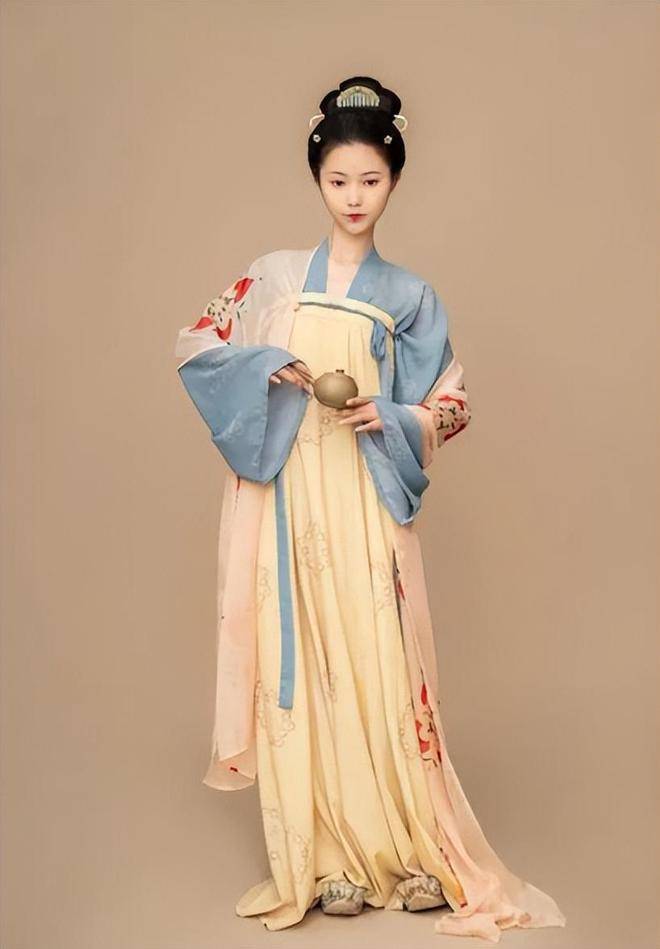
Compare that to Song era fashion historical reproduction:
 .
.
The cold spell didn't hit until the Ming dynasty.
The fact 宋 and 五代十国 gets mushed together makes me sad.
Shocking given how much of Qing dynasty shows there continues to exist. 满汉 conflict is pretty well known, not sure what the censorship is hoping to achieve.
杨家将 is entirely fictional. But yes to the point that the famous military successes of North Song was greatly ignored. 白马岭、满城、雁门、唐河 were all majorly successful campaigns. The other thing is that there were a lot more eunuchs in military service during the Song dynasty and were involved in much of Song era military success, a thing that toxic masculinity has a hard time accepting.
The first two are from South Song, so don't really fall in the "early Song" category. 苏轼 is actually a pretty positive case if you consider the fact that in other dynasties, he would have lost his head, but instead he merely got kicked out of his job. North Song was well known for being less blood thirsty about officials that the emperor didn't like, resulting in cases like 寇准, where the guy managed to get fired five times from the same position rather than just...y'know, getting executed.
I mean, 明 was literally a case of successful south fighting back to the north example.
This is true, but it's also just a stereotype that's straight up wrong. Plus the North isn't much better, since it is considered to be uncouth, barbaric, uncivilized, and dumb. South is rich while the North is poor (which is why it used to be that people got sent up to 燕京, aka modern day Beijing, to die). So if we're talking about culture, the South has the better reputation. Plus, until Western influence, Chinese traditional culture elevated the South (south is traditionally at the top of the map, and it's why the compass is called 指南针), while the North is considered the land of the dead.
Basically there's biases against both directions. I guess that's why it's called 中国. Fuck everyone outside of the central plains... (=_=)
no subject
Date: 2024-12-03 01:56 (UTC)Image is not loading for me.
> The cold spell didn't hit until the Ming dynasty.
I thought the temperature spike during Tang was pretty much paralleled and supported the rise and fall of 吐蕃.
> The fact 宋 and 五代十国 gets mushed together makes me sad.
I think 五代十国 just gets skipped in the popular consciousness rather than mushed into Song. I mean, over a hundred years of late Tang also got skipped.
> 杨家将 is entirely fictional.
I know, but the story is typically set in early Song. Similarly like stories of other Song figures are typically framed as tragedies or at least, not happy endings. It doesn't really matter what the actual history is like, since we're talking impression in popular consciousness.
> I mean, 明 was literally a case of successful south fighting back to the north example.
Eh, 朱元璋 sure. But then after his death, 朱棣 kind of reconquered the country, and his base of operations was 北京, hence moving the capital, killing lotsa southern intelligentsia that supported 建文, and starting the edit wars on 明史.
> Basically there's biases against both directions.
Oh, there's biases in every direction if you look for it. Even in official histories, there's probably conflicts between different eras looking back on previous dynasties. In modern fiction, I guess it would really depend on the writer (or screenwriter/production investor/etc.)
no subject
Date: 2024-12-03 03:12 (UTC)Tang: https://p3.itc.cn/q_70/images03/20230527/ef2f5a6c11184ae48b06c689aaa16081.jpeg
Song: https://i.ibb.co/48wpF4X/640.png
I don't know about that (haven't looked into it), but the "little ice age" correlated to Ming dynasty (https://en.wikipedia.org/wiki/Little_Ice_Age). It's possible there was a little warming age, but, again, I haven't looked into it so can't say one way or another.
Looking at Wikipedia, the "medieval warm period" (https://en.wikipedia.org/wiki/Medieval_Warm_Period) corresponds to Song dynasty so...🤷♀️
Yes, and that's kind of what I mean by 宋 being unloved. Because people ignore the actual history of the kind of cool stuff that happened, and overly focus on the shittier/tragic aspect.
Kind of like how 秦 has been cursed out for 2000+ years while 汉 got all the credit, yet 秦's political influence on China is immense. Not only is the name "China" itself from 秦 era influence, the 秦 style central government has been maintained to this day. Even after multiple political revolutions, industrialization, modernization, westernization, the 秦 governance system (aka 中央集权 and 户籍) is still being used. History really has been a bit unfair to some of the less popular but immensely influential dynasties.
LOL. Yes. True. I'm just saying the south successfully fighting back up north does happen. But for some reason history has a bias of focusing on northern success rather than southern success.
Yes, I'm bemoaning that in modern mass media, the anti-south bias is more represented than the anti-north bias. Which results in 宋 not really getting a fair share of the glorification. Hell, even 秦 got that one movie that tried to reform the public image of 秦始皇. Given 宋's relative recency (as compared to 秦) and much longer existence, it's really sad that it gets so little love.
no subject
Date: 2024-12-03 04:49 (UTC)If you're talking historically, it's cuz Han lasted longer and wrote the actual history books (史记,汉书), while Qin didn't have much records that survived.
But if we're talking about modern perspectives, I don't actually recall all that many famous/representative stories of Han either. I mean, unless you want to count half of ROTK I guess. The most often modernly depicted Han stories tend to be 汉武帝, and honestly, that guy didn't have a much better rep than 秦始皇...
Though, I think that in the more recent time period, the modern rep of Qin has been improving with the discoveries of the Qin scrolls, shows like 秦时明月, etc. Going by online novels, most modern authors actually root for 秦始皇 than for any of the Han emperors.
(Note: Personally, I think the crazy fangirls of Qin have gone a too far in the other direction. Yes, Qin had a lot of influence on history. But so did Han.)
> I'm bemoaning that in modern mass media, the anti-south bias is more represented than the anti-north bias.
Well, anti-north bias can easily get mixed into ethnic politics I guess. While anti-south bias is...politically safer, maybe?
> Hell, even 秦 got that one movie that tried to reform the public image of 秦始皇.
Hahah... I guess if we're talking about shows centered around specific emperors (like 康熙王朝, 汉武大帝, etc.), I wonder if the problem is Song just lacks emperors whose lives are interesting enough to romanticize... while not becoming the villain. Like, 宋太祖 has a promising career story, but it ends too abruptly (and mysteriously) to have closure. 宋仁宗 is too overshadowed by his court. 英宗 & 哲宗 had short reigns/life. Can't really think of anyone else who would make for a good story.
no subject
Date: 2024-12-03 06:17 (UTC)《汉武大帝》、《美人心计》、《大汉赋》、《楚汉传奇》、《大汉天子》、《母仪天下》、《昭君出塞》、《大汉情缘之云中歌》、etc.
Have any of them managed to make the jump to TV yet? Am curious.
Not surprised. I mean, ultimately Qin only had like 30+ years (as an empire, obviously the State of Qin lasted much longer prior to unification). The best Qin dramas tracks its rise from the weakest of the warring states to somehow managing to rise to the top and unify the other states. But during the actual dynasty, the only one worth dramatizing was 秦始皇 and it's objectively a 50-50 in terms of his Ws and Ls. But with 2000+ years of constantly being shat on by the histories, I imagine the fangirls are lashing back hard.
Given the oodles and oodles of 乾隆、唐太宗 stories (or at least stories set during their reign), I feel like 宋仁宗's reign should at least be worth a few more takes.
I mean, I'll take his court. But even his court doesn't get a lot of dramatization other than 包拯. The likes of 范仲淹、寇准、欧阳修、晏殊、苏轼 etc. all lived pretty epic lives worthy of politicking court dramas, but period dramas tend to ignore them.
Also, I'd argue that the power transfer drama from 太祖 to 太宗 to 真宗 to 仁宗 was really complicated and interesting, not to mention 刘娥 was probably the second most politically ambitious (and successful) woman after 武则天. Plus she was succeeded by 曹太后, who was also a political genius in her own right (and practically co-ruled with 仁宗 whilst managing to avoid all the usual complaints of women interfering with courtly matters). The material is there, but I just don't think the interest is. Hence, sadness.
no subject
Date: 2024-12-03 08:51 (UTC)I don't think so. This trend comes up more in stories that feature multiple emperors/dynasties, where comparisons inevitably come up. (And as mentioned with the crazy fangirls, there's a lot of 拉踩 that goes on.) These type of stories don't transition well to TV/movie.
> The likes of 范仲淹、寇准、欧阳修、晏殊、苏轼 etc. all lived pretty epic lives worthy of politicking court dramas, but period dramas tend to ignore them.
My guess is that the politics involved (which is mostly related to complex policy, economics, diplomacy) is too complicated for screenwriters to handle. Or for production to expect audiences to handle well enough to make it worth their while to produce.
In comparison, succession crisis drama or romance drama is easier to write and more reliable with regards to audience response.
> from 太祖 to 太宗 to 真宗 to 仁宗 was really complicated and interesting
But who gets to be the main protagonist / "good guy"? I mean, interesting from historical reading doesn't necessarily translate well into sales pitch or screenplay.
As for 刘娥, I simply don't think she has the same kind of name recognition as 武则天 (or even 吕后), which makes it less likely for productions to consider her.